
Natasha Chuk
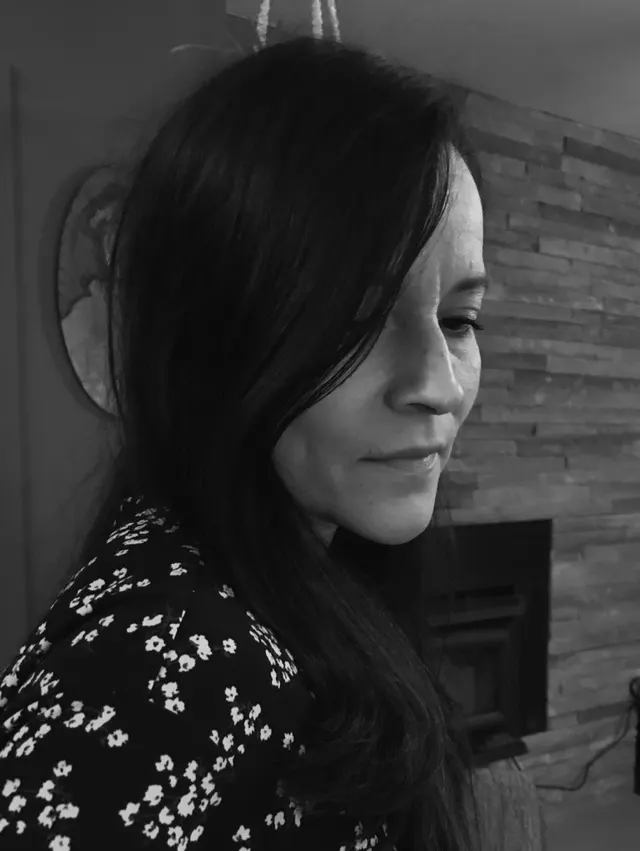
Natasha Chuk, PhD is a New York City-based media theorist, arts writer, lecturer, and independent curator engaged with the histories and philosophies of creative technologies and their entanglements with perception, aesthetics, embodiment, identity, and cultural imagination. Her writing and criticism have appeared in numerous periodicals, edited volumes, and artist catalogues, and she is the author of two books: Photo Obscura: The Photographic in Post-Photography (Intellect, 2025) and Vanishing Points: Articulations of Death, Fragmentation, and the Unexperienced Experience of Created Objects (Intellect, 2015). She teaches courses in the areas of film, photography, video game studies, new media art, and media theory at the School of Visual Arts and Parsons.
talk :The World As Camera
This talk draws on Photo Obscura: The Photographic in Post-Photography (Intellect, 2025), a book which examines how photography continues to evolve under the conditions of digital culture, networked media, and computational image-making. I argue that we have entered an advanced stage of post-photography, where collecting, copying, and manipulating images are no longer the dominant operations. They have been joined by new ways of working with, within, and around the photographic image, yielding results that no longer resemble photographs at all. Yet post-photography does not signal the end of photography, rather it identifies its ongoing transformation toward hybrid forms that merge aesthetics, technology, philosophy, and computation. These transformations reshape perception, subjectivity, authorship, and our understanding of truth and reality itself. Furthermore, the camera has been remediated into broader technological systems beyond a single device or apparatus. Images emerge across distributed environments of cloud computing, data storage, machine vision, networks, browsers, video games, 3D environments, surveillance systems, and computational interfaces. Every digital space has become a potential site of capture, navigation, extraction, or simulation. In this way, the world itself has become a camera.